

An unexpected journey from photography to writing
“So how did you come up with the idea to write a book?”
I hear this a lot these days, now that word has gotten around that I’m about to publish one. From friends, family, colleagues, people I know through photography. It’s a fair question. Not an easy one to answer, though, because I never sat down one day and said: now I’m going to write a book.
Landschaft anders sehen (translates as: a different way of seeing landscapes) — which will be published by dpunkt Verlag on November 26 — sort of happened. It grew over time. And looking back, that seems rather fitting.
I had actually experimented with writing long before that. Back in 2020, when Covid sent us all into lockdown, I began working on what I thought might become a book. I wrote quite a few pages, but the project eventually came to a halt. It's been sitting on my hard drive ever since. Waiting politely. And that wasn't even my first attempt. I had almost forgotten about it, but some twenty years ago, long before I became serious about photography, I started writing a novel. That, too, stalled somehow. So, in a way, writing had been with me for quite some time.
As I explain in Landschaft anders sehen, I strongly believe that our artistic voice develops over time. It's shaped by what we love, what we experience, and everything that leaves an impression on us. Often long before we become aware of it. Writing this book made me reflect on my own creative roots.
I must have been around fourteen when I started writing lyrics. Later, when we formed our first band, I continued writing — this time for actual songs. And I've been doing so for more than thirty years now. Much longer than I've been photographing. Looking back, writing a book feels like a natural evolution of my creative journey.
All those different forms of creative expression I've explored over the years — music, photography, video (I've even made a few music videos), a brief adventure into acrylic painting, and now writing — were driven by curiosity and the desire to express myself. No grand plan. Just that little feeling of “I'd like to try this.” And then seeing where it leads.
A small idea that grew
When I first started working on Landschaft anders sehen, I had something much smaller in mind. I wanted to create an e-book, something I could offer through my website. A few thoughts about landscape photography and how I find images. Manageable. Then the questions piled up. The more I tried to explain how I photograph, the more I ended up talking about things that have nothing to do with cameras. Apparently, taking the easy route has never been my greatest talent.
What I hadn't anticipated was that the book would take four years to finish. Four years! Some of them wonderful, some among the hardest I’ve had. The manuscript went through all of it. There were months when I wrote a lot and months when I didn’t open the file. Life added pages I couldn’t have planned. Those are in the book.
I could have made a coffee-table book. I love those books, and nobody would have expected me to explain anything. But I wanted to know why we photograph what we photograph, and why one picture matters to us more than another. I wanted it personal, the kind of book I’d want to read by someone else. And behind all of it sat one question: what does this say about us?
Writing to understand
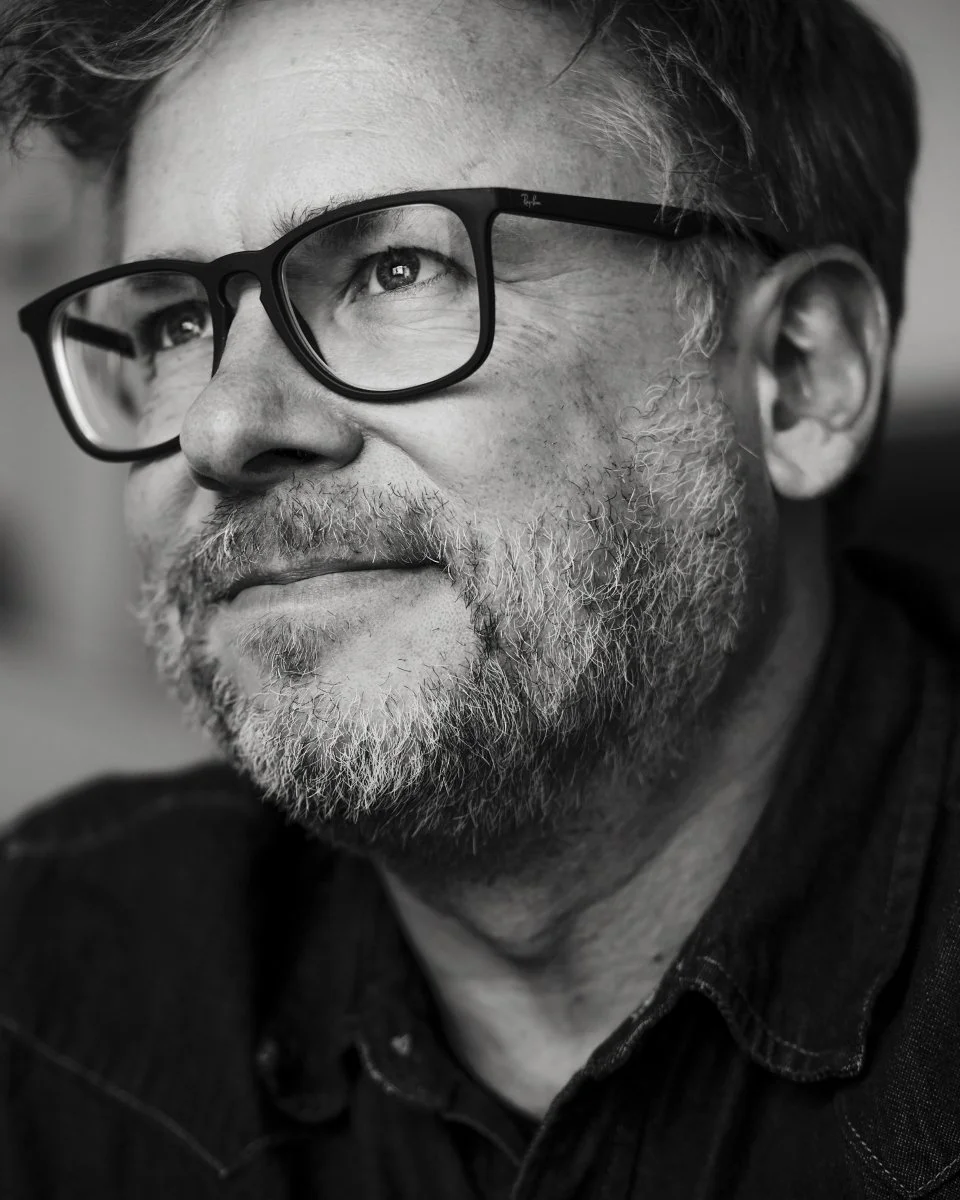
Kai in October, 2026
When I’m out with the camera, I mostly don’t think. Something catches my eye, I follow it, and sometimes a picture comes out of it. Explaining that to someone else turned out to be a different job. I had to find words for decisions I’d made without noticing I’d made them. Why do I leave the sky out? Why this scene and not the one next to it?
Along the way I found connections I hadn’t seen before. An album cover I’ve loved since my teens turned up decades later in a drone photograph from Iceland. I hadn’t been thinking of it when I pressed the shutter. Writing is how I found out.
Finding another way to create
Landschaft anders sehen is divided into four major parts. And it reflects my own approach to teaching and mentoring. When I work with photographers, I usually start by getting to know them and sharing what I know. We explore, learn to see differently, and build confidence along the way. And as we progress, I gradually step back. I ask more questions and give fewer answers. Because ultimately, I don't want anyone to photograph like me. Not because I want to keep my own approach to myself. Quite the opposite. I want to help others discover what makes their own way of seeing unique.
That's also the journey I hope to take readers on. The book begins with my own story and experiences, moves through the craft of seeing and creating photographs, and gradually opens up to broader questions of creativity, personal expression, and what it means to follow your own path. By the end, I’d rather walk alongside the reader than ahead of them.
The later chapters were the best to write. I stopped explaining and started telling stories, and the flow came, that state I know from photography and music, where an hour disappears. With the camera I find fragments of the world and interpret them. With words I could build a scene from nothing and leave the gaps for the reader. I hadn’t planned that either. But somehow, it all made sense. Maybe you don't always know why you're creating something until you've actually created it.
Over the years, photography has brought me together with people whose stories have inspired me just as much as their images. I've come to appreciate that every creative journey is different. And that sometimes, hearing about someone else's experiences helps us understand our own a little better.
That's what I hope this book might offer. Not a path to follow, but a moment to pause. To reflect on what shapes the way we see, what matters to us, and where our curiosity might take us next.
And perhaps there's more to come
On Whit Monday this year, after several days of writing, I sat in the garden, tired and happy. I started jotting down a few lines, nothing ambitious. One sentence led to the next, and before I knew it I had a short story. It had nothing to do with photography. Or perhaps it did. Because it was personal and therefore came from the same place as my pictures. This time I didn’t need a camera.
I saved the story. You never know.